6000 Sudoku Puzzles for Kids: A Fun Gateway to Logical Thinking
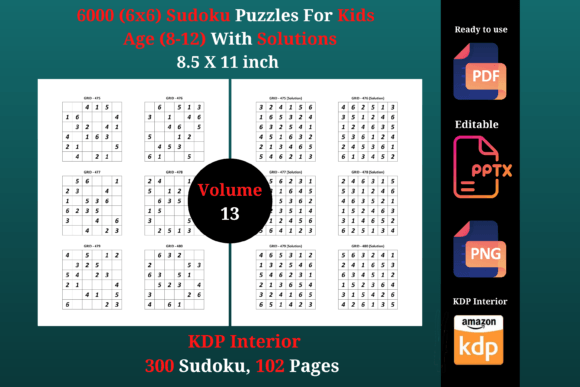
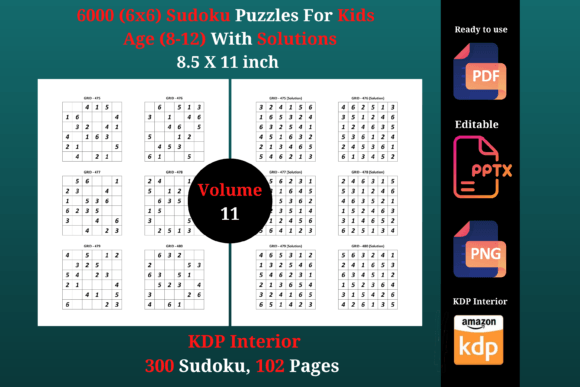
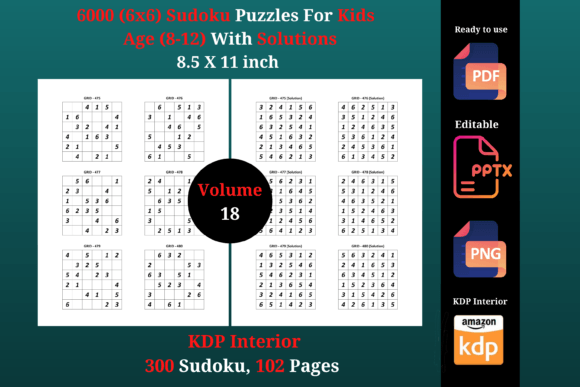
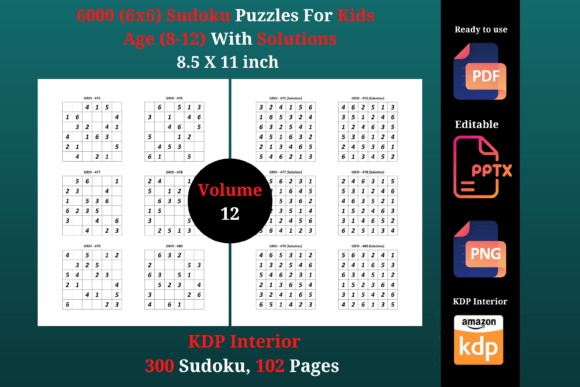
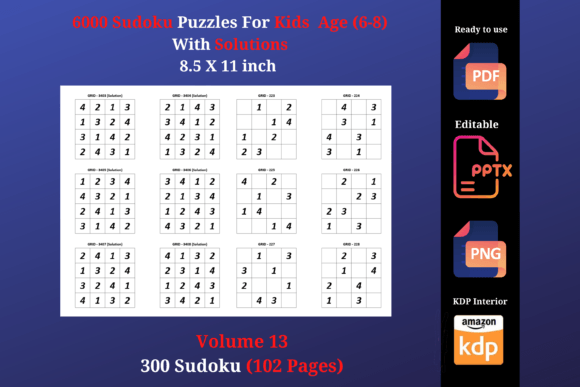
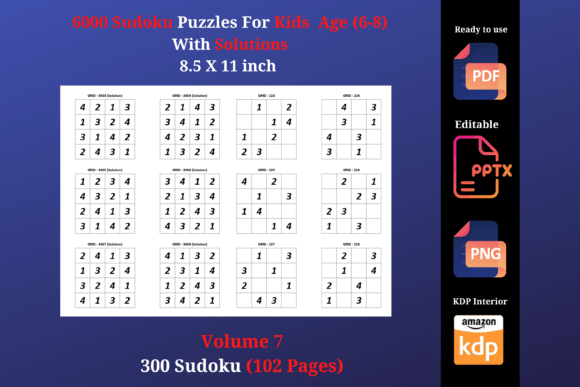
In a world increasingly driven by screens and instant entertainment, finding activities that genuinely engage a child's mind while being fun can feel like a challenge. Enter the classic puzzle of Sudoku, but reimagined for young learners. The series represented by 6000 Sudoku 4 X 4 for Kids Volume 7 offers a perfect solution. This isn't just a single book; it's part of a comprehensive collection of 6000 unique, kid-friendly puzzles spread across 20 volumes, each designed to build confidence, sharpen logic, and provide hours of constructive play. Volume 7, with its 300 specific puzzles and accompanying solutions, stands as a ready-to-use toolkit for parents, educators, and caregivers.
The Fundamentals: Why 4x4 Sudoku for Kids?
Traditional Sudoku, with its 9x9 grid, can be intimidating for a beginner, especially a young one. The 4x4 grid is the ideal starting point. It reduces the number of cells and possible numbers (typically 1 through 4) to a manageable scale. This smaller format allows children to grasp the core rule of Sudoku without frustration: each row, each column, and each of the four 2x2 blocks must contain all the numbers from 1 to 4, with no repeats.
This simple rule opens a door to complex thinking. Solving a 4x4 puzzle requires observation, pattern recognition, and deductive reasoning. A child learns to ask, "If this cell has a 3, then that row cannot have another 3, so what could go in this empty space?" It’s a foundational lesson in logic that doesn't feel like a lesson at all—it feels like a game.
Beyond the Puzzle: The Educational Purpose and Significance
The significance of these puzzles extends far beyond filling in squares. Engaging with Sudoku at a young age fosters critical cognitive skills that are directly relevant to modern education and life.
- Logical Reasoning & Problem-Solving: Each puzzle is a self-contained problem. Kids learn to approach it step-by-step, testing hypotheses and eliminating possibilities, which mirrors the scientific method and everyday decision-making.
- Concentration & Attention to Detail: Sudoku demands focus. Scanning rows, columns, and blocks for missing numbers improves a child's ability to sustain attention and notice details, a skill crucial for academic success in all subjects.
- Pattern Recognition: Mathematics, language, and even social interactions are built on patterns. Sudoku trains the brain to see and apply patterns in a structured environment.
- Patience & Resilience: Not every puzzle is solved instantly. The process teaches children to stick with a challenge, learn from mistakes (using the provided solutions as a guide), and experience the satisfaction of persistence.
In an educational landscape that values STEM (Science, Technology, Engineering, and Mathematics), these puzzles provide a gentle, non-digital introduction to systematic thinking, which is the bedrock of coding, engineering, and analytical tasks.
The Practical Relevance: Volume 7 as a Ready-to-Use Resource
6000 Sudoku 4 X 4 for Kids Volume 7 is designed not just with educational intent but with practical utility for the modern parent or teacher. The product specifications speak directly to real-world needs.
- 300 Puzzles & 300 Solutions: The volume offers substantial content. This quantity ensures variety and progression, allowing a child to build skill over time without repetition boredom.
- Kids Level Design: The puzzles are curated to be accessible. They start simpler, building confidence before introducing more complex logical challenges within the 4x4 framework.
- Multiple File Formats: The inclusion of a PDF ready for upload, PNG files, and an editable PPTX file addresses diverse use cases. The PDF is perfect for instant printing or digital distribution. PNG files allow for easy integration into other digital projects or worksheets. The PPTX editable file is a powerful tool for educators who wish to customize puzzles, create their own sequences, or integrate them into larger lesson presentations.
- Standard Size (8.5 x 11 inches): This ensures easy printing on common home or school printers, with no awkward scaling required. The puzzles will fit neatly into binders or folders.
This multi-format approach fits seamlessly into modern life. A parent can print a few puzzles for a road trip. A teacher can embed a puzzle into a weekly homework packet via the PDF or create a classroom activity using the editable PowerPoint file. A tutor can use the PNGs on a digital whiteboard. The resource adapts to the user's context.
Clarifying Common Assumptions about Sudoku for Kids
Some might assume that Sudoku is purely a mathematical puzzle. While it uses numbers, it's fundamentally about logic, not arithmetic. No calculation is required—a child who is just learning to recognize numerals 1 through 4 can participate. Another assumption is that such puzzles are solitary and silent. In reality, solving a 4x4 Sudoku can be a collaborative, social activity. Parents and children, or students in a classroom, can work together, discussing their reasoning aloud. This turns it into a tool for developing communication skills as well.
The most important misunderstanding to correct is that this is merely a "time-filler." It is a targeted brain exercise. Unlike passive entertainment, it actively constructs neural pathways associated with executive function. Each completed puzzle is a small, measurable achievement that boosts a child's confidence in their own thinking abilities.
Building a Broader Understanding: Sudoku in a Child's Developmental Ecosystem
To see the full value, we must place this activity within the broader ecosystem of a child's development. It complements other key areas.
- Complement to Digital Learning: As children spend more time with interactive apps, a tangible, paper-based puzzle offers a crucial different sensory experience. It encourages offline focus and manual interaction, balancing digital exposure.
- Foundation for Coding Logic: The step-by-step, rule-based logic of Sudoku is strikingly similar to the conditional logic (if-then-else) used in basic programming. Early exposure to this structured thinking can make future coding lessons feel more intuitive.
- Boosting Academic Performance: The improved concentration, pattern recognition, and systematic approach gained from Sudoku can transfer directly to subjects like reading comprehension (following narrative logic), science (following experimental steps), and of course, mathematics.
- Family Bonding & Creative Time: These puzzles provide a shared, screen-free activity that families can enjoy together. The editable files even allow for creative customization, where families might create their own "family Sudoku" with symbols or colors instead of numbers.
The series of 20 volumes, culminating in 6000 unique puzzles, represents a long-term resource. A child can progress from Volume 1 through Volume 20, experiencing a gradual, natural increase in challenge without the abrupt jump to a 9x9 grid. This curated progression is key to maintaining engagement and building mastery.
The Ready-to-Go Advantage for KDP and Beyond
For authors, educators, or content creators using platforms like Kindle Direct Publishing (KDP), this interior product is a significant asset. The professionally formatted, ready-to-upload PDF eliminates the technical hurdles of layout design. The inclusion of solutions is a critical value-add for any publication. Having the puzzles in an editable PPTX format also means the content is not static; it can be rebranded, combined with other materials, or adapted for specific audiences or promotional samples.
Ultimately, 6000 Sudoku 4 X 4 for Kids Volume 7 is more than a book of puzzles. It is a carefully designed educational instrument. It harnesses the timeless appeal of a logic puzzle and scales it perfectly for a young mind. By providing it in versatile, modern file formats, it ensures that this tool can be easily integrated into daily routines, classroom plans, or publishing projects, making the development of critical thinking skills accessible, engaging, and profoundly simple to implement.