You've Got This Daily Planner: A Practical Foundation for Organized Workflows
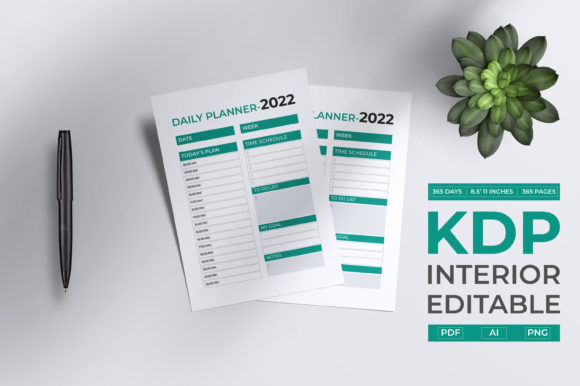
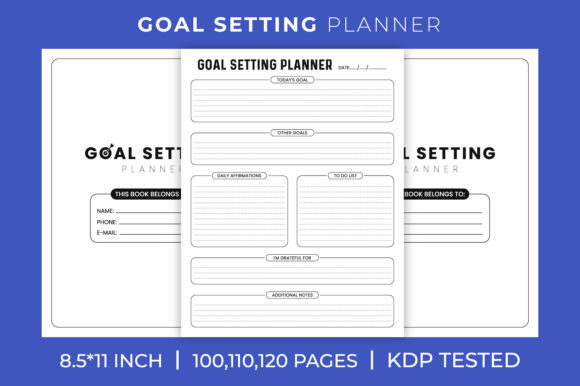
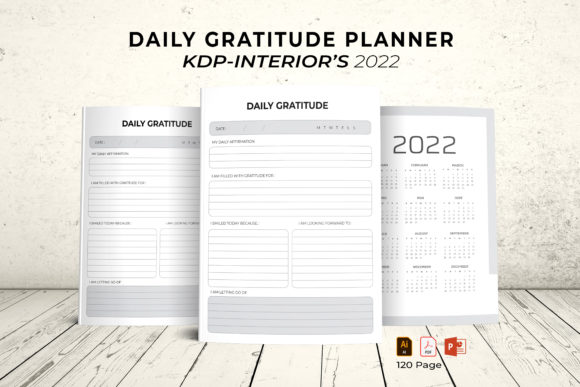
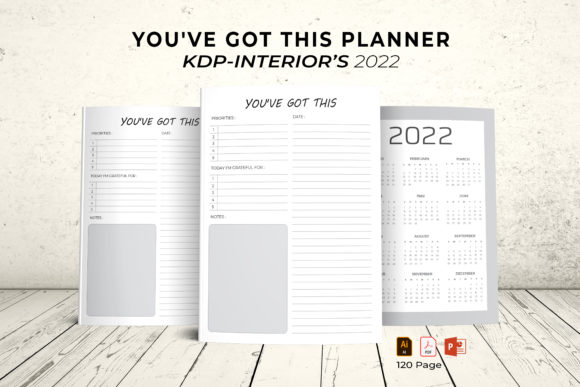
Effective organization is not a single act, but a process. It requires a system that is both structured and adaptable, capable of serving as a reliable foundation for daily tasks, long-term projects, and personal goals. The You've Got This Daily Planner functions as this foundational element. It is not merely a calendar or a collection of blank pages; it is a designed interior template, specifically formatted for KDP (Kindle Direct Publishing) and ready for immediate professional or personal use. Its core purpose is to provide a high-quality, fully editable framework upon which individuals can build their own customized planning system, eliminating the time-consuming design work and technical hurdles that often derail the implementation of a consistent planning habit.
Integrating the Planner into Your Existing Workflow
The value of any tool lies in how seamlessly it integrates into your existing processes. The You've Got This Daily Planner is engineered for integration. Provided in multiple file formats—Adobe Illustrator (AI/EPS), Microsoft PowerPoint (PPT), JPEG, and a print-ready PDF—it offers compatibility with the software many creators and professionals already use. This means you can incorporate it into your workflow without learning new programs. A blogger, for instance, might open the PowerPoint file alongside their content calendar to quickly draft a week's posting schedule. A freelancer could use the Illustrator vector files to match the planner's color scheme with their client brand assets for a cohesive project management document. The process of adoption becomes a matter of opening a file and beginning work, rather than a project in itself.
Consider the stage before a major project launch. Preparation often involves assembling various resources: mood boards, task lists, milestone calendars. The editable nature of this planner allows it to serve as the central repository for these elements. You can import project timelines directly into the 2022 calendar, use the resizable vector shapes to create visual progress trackers, and adjust colors to denote different priority levels or team responsibilities. This preparatory work creates a unified command center, reducing the fragmentation of information across disparate apps and notebooks.
Practical Implementation and Daily Execution
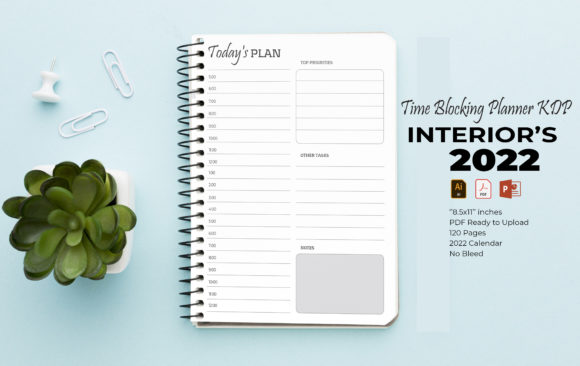
During the active phase of any endeavor—whether running a small business, completing an educational course, or managing a creative hobby—the planner transitions from a planning tool to an execution tool. Its 120-page structure provides ample space for daily logging without the constraint of pre-filled, rigid layouts that may not suit your specific needs. The usability factor is heightened by its print-ready design. You can upload the PDF directly to KDP to sell your customized version, or print it at home, in your office, or at a professional print shop for immediate physical use. For those who prefer a hybrid digital-physical system, you can edit the digital file weekly, print the updated pages, and add them to a binder, maintaining a dynamic yet tactile record.
A key observation for long-term use is consistency. The quality of the template—300 DPI resolution, clean vector graphics—ensures that whether you are printing iteratively or viewing on screen, the experience remains sharp and professional. This consistency supports habit formation. When a tool is reliable and pleasant to use, you are more likely to return to it daily. For the productivity-minded user, this transforms the planner from an experiment into a staple. An educator, for example, could use it to track lesson planning, student progress, and administrative tasks across an entire semester, with each week's layout feeling familiar and efficient, minimizing cognitive load.
Adapting the Framework to Specific Use Cases
The true test of a flexible tool is how it adapts to varied roles. For the entrepreneur, the You've Got This Daily Planner can interact with other business assets. The editable file can be modified to include quarterly goal sections alongside the monthly calendar, or financial tracking shapes can be added next to daily task lists. It becomes a living business document that evolves with the company's needs.
For marketers and content creators, the planner can function as a campaign tracker. The 2022 calendar provides the macro timeline, while the daily pages allow for micro-tracking of content deadlines, publication dates, and performance metrics entered post-campaign. It bridges the gap between high-level strategy and daily granular action. Similarly, a hobbyist pursuing a learning goal like mastering a craft or language can use the pages to schedule practice sessions, log insights, and visualize progress over the year, making the abstract goal concrete and manageable.
The included formats facilitate this adaptation. The vector shapes are not static decorations; they are functional, resizable elements. You can turn a circle into a habit tracker checkbox, enlarge a banner to highlight a weekly priority, or recolor a shape to categorize tasks. This level of control, without requiring advanced design skills, empowers the user to mold the tool to their precise process, rather than forcing their process to conform to a limited tool.
Ensuring Quality and Efficiency in Your Process
Quality control in personal and professional organization often falters due to tool inconsistency. Notes in a cheap notebook, digital reminders in a separate app, and a wall calendar create a fragmented system where information can be lost or overlooked. The You've Got This Daily Planner, by offering a single, high-quality, multi-format source, addresses this. You build your system on a verified foundation: a file tested for KDP, with correct dimensions (US Letter 8.5 x 11 inches), no bleed requirements for simple printing, and organized pages. This reliability saves time and prevents errors in the printing or publishing phase, whether you are creating a product for sale or a tool for personal use.
Efficiency is further unlocked by the "easy to editable" nature of the files. Changes are not laborious. If your workflow shifts from weekly planning to daily focus, you can quickly reformat a section. If you need to share a planning template with a team member, the PowerPoint or PDF format makes distribution straightforward. This reduces the overhead cost of maintaining your organizational system, allowing you to devote energy to the actual work being planned, rather than the maintenance of the planner itself.
A Foundation for Sustainable Organization
The ultimate goal of any planning system is sustainable use. It should endure beyond a New Year's resolution or a single project cycle. The design of this planner supports longevity. Its clean, uncluttered aesthetic (with no bleed) and substantial page count make it suitable for a full year's commitment. The inclusion of the 2022 calendar provides the annual framework, while the daily pages offer the granular space for execution. By integrating it with other decisions—choosing a binding method if printed, setting a daily review ritual, linking its tasks to broader digital calendars—you create an interconnected ecosystem for productivity.
Integrating the You've Got This Daily Planner smoothly into your routine begins with a simple implementation step: choose the format that matches your dominant workflow. If you design in Illustrator, start with the AI file. If you operate in a Microsoft environment, the PPT file is your entry point. Then, customize a single week's layout. Test it. Print it or use it digitally. Observe how it interacts with your other tools. Does it complement your digital task manager? Does it provide a better space for creative brainstorming than your current notebook? This iterative, practical approach grounds the tool in your real-world needs, ensuring it becomes a functional part of your process, not just an abstract asset.
In the broader process of managing work, life, and goals, a reliable, adaptable foundation is crucial. The You've Got This Daily Planner provides that foundation in a concrete, ready-to-use form. It shifts the effort from creating a system to operating within one, allowing professionals, creators, and anyone dedicated to organized execution to focus on what matters most: the work itself, confident that the framework supporting it is sturdy, clear, and entirely under their control.