The Ultimate Guide to Creating Your Own Editable Student Planner for KDP
In the bustling world of academics, organization isn’t just a nice-to-have skill; it’s a fundamental necessity for success. For students juggling classes, assignments, extracurriculars, and personal life, a reliable planner is their command center. While physical planners are abundant, there’s a growing and powerful trend towards digital, customizable tools. This is where the concept of an editable student planner shines, especially for entrepreneurs looking to publish on platforms like Amazon KDP. An Editable 2023-2024 Student Planner for KDP Interiors represents not just a product, but a versatile solution that bridges creativity, technology, and practical daily support for learners everywhere.
What Is an Editable Student Planner for KDP?
Let’s build our understanding from the ground up. Amazon’s Kindle Direct Publishing (KDP) is a platform where independent creators can publish and sell paperback books and notebooks directly to a global audience. An “interior” refers to the inside pages of the book—the content the customer will actually use. An editable planner interior means that the digital file provided to the KDP seller is designed in a format like PDF or a source file from design software, with elements that can be modified before final publication. Unlike a static, finished book, these are template files.
The specific description “Editable 2023-2024 Student Planner” tells us it’s a comprehensive academic year tool. It spans two calendar years, accommodating various international academic schedules. The promise of getting “high-quality print-ready PDF files” signifies that after any personal edits, the final output meets professional printing standards, ensuring the seller can upload it to KDP with confidence that the physical product will look crisp and clear.
The Core Components and Their Significance
A well-structured student planner interior is more than just blank pages with dates. It’s a thoughtfully designed system. Breaking down the typical specifications helps us appreciate its practical relevance.
Essential Pages for Structure and Function
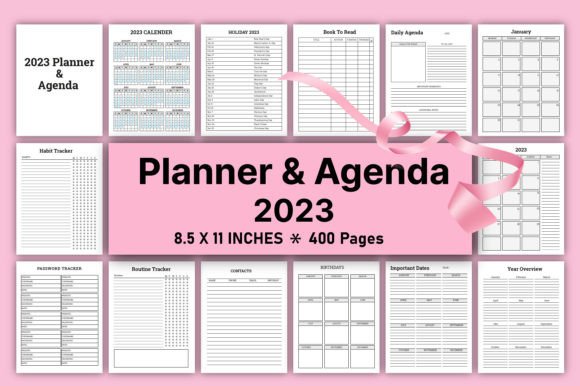
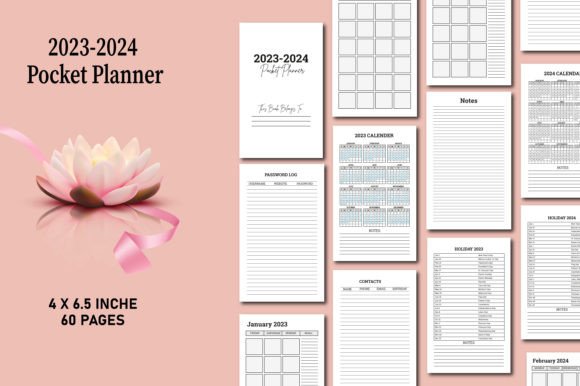
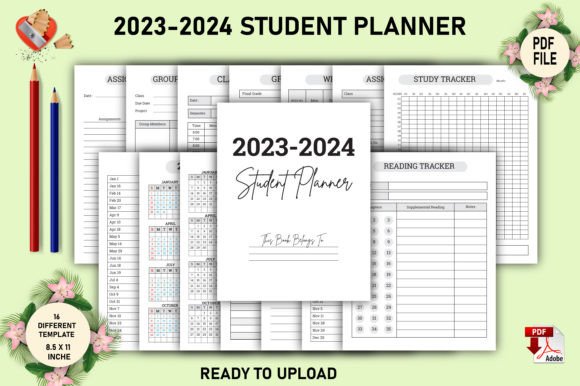
The foundation often includes a “Belongs To” page, allowing the student to personalize their planner right from the start. Then, the inclusion of separate 2023 and 2024 calendars, along with their respective holiday lists, provides a macro-view of the entire academic period. This helps in long-term planning for exam blocks, project deadlines, and vacation breaks.
Design Specifications for Professional Quality
The technical details are crucial for KDP success. A size of 8.5 x 11 Inches (US Letter) is a standard and popular format for notebooks. “Without bleed area” means the design content doesn’t extend to the edges where the book might be trimmed, which is a common requirement for KDP interiors. “KDP Tested” implies the files have been validated to meet Amazon’s upload requirements, reducing the risk of rejection. Using CMYK color mode ensures the colors are optimized for physical printing presses, not just digital screens, and a resolution of 300 PPI (Pixels Per Inch) guarantees high-definition, sharp text and graphics. These specs collectively ensure the final printed planner feels professional and reliable.
The Power of Variety: Multiple Templates
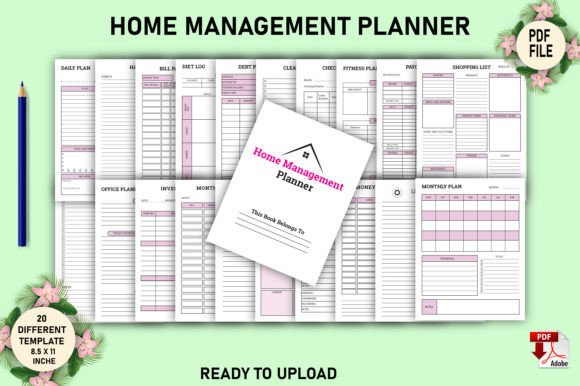
The mention of “16 different templates” is a significant value point. This variety caters to different learning styles and planning needs. Templates might include:
- Monthly calendar spreads
- Weekly schedule views with hourly breakdowns
- Daily planning pages with priority task lists
- Assignment trackers and project milestones
- Grade log sheets and goal-setting pages
- Simple note pages and habit trackers
This diversity allows the KDP publisher to offer a single product that can suit a wide audience, from high school students to university graduates and even busy professionals who appreciate academic-style organization.
Why Editable Planners Fit Perfectly into Modern Education and Business
This product concept sits at a fascinating intersection of modern life.
For the Student User: Empowerment Through Customization
In today’s educational landscape, students are encouraged to take ownership of their learning process. A physical planner bought off a shelf might have fixed sections that don’t align with their specific courses or priorities. An editable planner, once published by a savvy KDP seller, becomes a tailored tool. The student can, in a sense, interact with a structure designed for adaptability. It acknowledges that organization is personal.
For the KDP Entrepreneur: A Creative and Technical Venture
On the business side, creating editable interiors is a booming niche. It aligns with the DIY ethos of digital entrepreneurship. The creator doesn’t just design one planner; they design a system that others can potentially tweak (like adding a school logo or changing color themes) before mass printing. This adds value for fellow publishers. Following the creator’s profile for new products, as mentioned in the description, speaks to the community and iterative nature of this business—it’s about building a portfolio of helpful tools.
Clarifying a Common Misunderstanding
A potential assumption might be that “editable” means the end customer can edit the PDF. This is usually not the case. The editability refers to the file before it is published on KDP. The seller—the person uploading to Amazon—may make final adjustments. The customer receives a finished, printed paperback planner. This clarification is key to understanding the KDP supply chain: designers create flexible templates for publishers, who then produce fixed, high-quality books for consumers.
The Journey from Digital File to Physical Student Companion
Imagine the practical journey: A graphic designer meticulously creates 16 template pages in professional software, adhering to all KDP specifications. They compile these into a print-ready PDF package and offer it as a digital download on a marketplace. An aspiring KDP publisher purchases it. They might add their own branding on the “Belongs To” page or adjust a color scheme to match a series they’re creating. They then upload this PDF to Amazon KDP. Amazon’s system prints and binds the books on demand. A student, searching for “2024 academic planner,” orders it. Within days, a crisp, 300 PPI, CMYK-printed planner arrives at their door, ready to help them navigate their school year.
This process exemplifies how technology streamlines creativity and logistics, making specialized tools accessible to a global market.
Building a Broader Understanding: The Role of Planners in Learning
Beyond the product specs, the deeper value of a student planner lies in its psychological and educational impact. Using a planner teaches time management, forward planning, and self-assessment. It externalizes cognitive load, freeing the student’s mind to focus on deep learning rather than remembering deadlines. A well-designed planner, like one built from these editable interiors, provides scaffolding for these skills. It’s not just a diary; it’s a training tool for executive function.
When the planner includes dedicated pages for goals, milestones, and habit tracking, it moves from simple scheduling to holistic life management. This fits perfectly with modern educational approaches that stress metacognition—thinking about one’s own thinking and learning processes.
Examples of Integration into Daily Academic Activities
- Project Planning: A student using a monthly calendar and a project tracker template can break down a semester-long research paper into weekly tasks, visually tracking progress.
- Balancing Commitments: The weekly schedule template helps a student visually block time for classes, club meetings, study sessions, and leisure, preventing overload.
- Exam Preparation: Using the assignment tracker alongside the holiday calendar, a student can plan revision sessions well ahead of exam weeks marked on the 2024 calendar.
In conclusion, an Editable 2023-2024 Student Planner for KDP Interiors is more than a set of digital files. It’s a gateway. For the entrepreneur, it’s a gateway to publishing a professional, tested product on a major platform. For the end-user, the student, it’s a gateway to a more organized, confident, and successful academic year. By understanding its components, specifications, and the ecosystem it operates within, we see how such a tool seamlessly integrates design, business technology, and the timeless human need for order and clarity in our pursuits. Whether you’re a creator designing the next template or a student flipping through the freshly printed pages, you’re participating in a cycle of productivity and support that defines modern, connected learning.